 how-to
The Science Behind Vagus Nerve Stimulation
Table of Contents
- How Vagus Nerve Stimulation Works in the Body
- Noninvasive Vagus Nerve Stimulation: Types and Mechanisms
- Vagus Nerve Stimulation for Anxiety: What the Research Shows
- Vagus Nerve Stimulation Safety and Side Effects
- What to Expect During a Noninvasive VNS Session
- How to Choose a Vagus Nerve Stimulation Provider in Los Angeles
- Conclusion: Integrating VNS Into Your Nervous System Routine
- Frequently Asked Questions
Last Updated: October 6, 2026
How Vagus Nerve Stimulation Works in the Body
Vagus nerve stimulation is a technique that sends mild electrical or vibrational signals to the vagus nerve, the longest cranial nerve in the body, to influence how the nervous system responds to stress. At Unwind Longevity, we help clients understand the science behind vagus nerve stimulation before they commit to a session.
The vagus nerve runs from your brainstem down through your neck, chest, and abdomen. It acts as a two-way communication line between your brain and your organs. When stimulated, it can shift your body out of "fight or flight" mode and into a calmer state.
That shift is the whole point. Most chronic stress problems come down to a nervous system that stays stuck in high alert.
The Vagal Pathways: From Neck to Brain
The nerve carries signals in both directions. About 80% of its fibers send information from your body up to your brain (Vagus Nerve Stimulation). The rest carry commands back down to your heart, lungs, and gut.
This is why stimulating the nerve at the neck can affect things like heart rate and digestion. The signal travels up to the brainstem, which then adjusts your body's stress response.
Neurotransmitters and the Anti-Inflammatory Reflex
When the vagus nerve fires, it triggers the release of acetylcholine, a chemical that helps calm inflammation. This is often called the cholinergic anti-inflammatory pathway.
The nerve also influences norepinephrine and GABA, two chemicals tied to mood and anxiety. Many researchers believe this is why vagus nerve stimulation can help with both stress and inflammation at the same time.
Noninvasive Vagus Nerve Stimulation: Types and Mechanisms
Noninvasive vagus nerve stimulation works by targeting the nerve without surgery. Instead of an implanted device, these methods use external tools to reach the nerve through the skin.
The most common approaches include:
- Transcutaneous auricular VNS: A small device clips to your ear and sends mild pulses to the auricular branch of the nerve
- Cervical VNS: A handheld device presses against the neck to reach the cervical branch
- Vibroacoustic therapy: Sound waves and vibration stimulate the nerve indirectly through the body
- Breathing and cold exposure: These activate the nerve through natural reflexes
Each method reaches the nerve through a different pathway, but the goal is the same: trigger the calming response.
Vagus Nerve Stimulation for Anxiety: What the Research Shows
Vagus nerve stimulation for anxiety is one of the most studied uses of the technique. Research suggests that stimulating the nerve can lower activity in the amygdala, the brain region tied to fear and worry.
The National Center for Complementary and Integrative Health overview of mind and body practices notes that vagus nerve stimulation is an active area of research for stress-related conditions.
How VNS Modulates the Stress Response
When the vagus nerve is activated, it slows your heart rate and shifts your breathing toward a calmer pattern. This tells your brain that you are safe.
Over time, this repeated signal can retrain the nervous system to recover faster from stress.
The effect is not instant for everyone.
Vagus Nerve Stimulation Safety and Side Effects
Vagus nerve stimulation safety and side effects are usually mild for noninvasive methods. The most common issues are tingling, redness, or a slight muscle twitch at the contact point.
Serious side effects are rare with external devices. Implanted versions carry more risk, including infection and voice changes, which is why they are reserved for specific medical cases.
You should talk to a doctor before trying VNS if you:
- Have a heart condition or arrhythmia
- Are pregnant
- Have an implanted medical device like a pacemaker
- Have a history of seizures
What to Expect During a Noninvasive VNS Session
You sit or lie down in a calm space while a practitioner places the device and adjusts the settings.
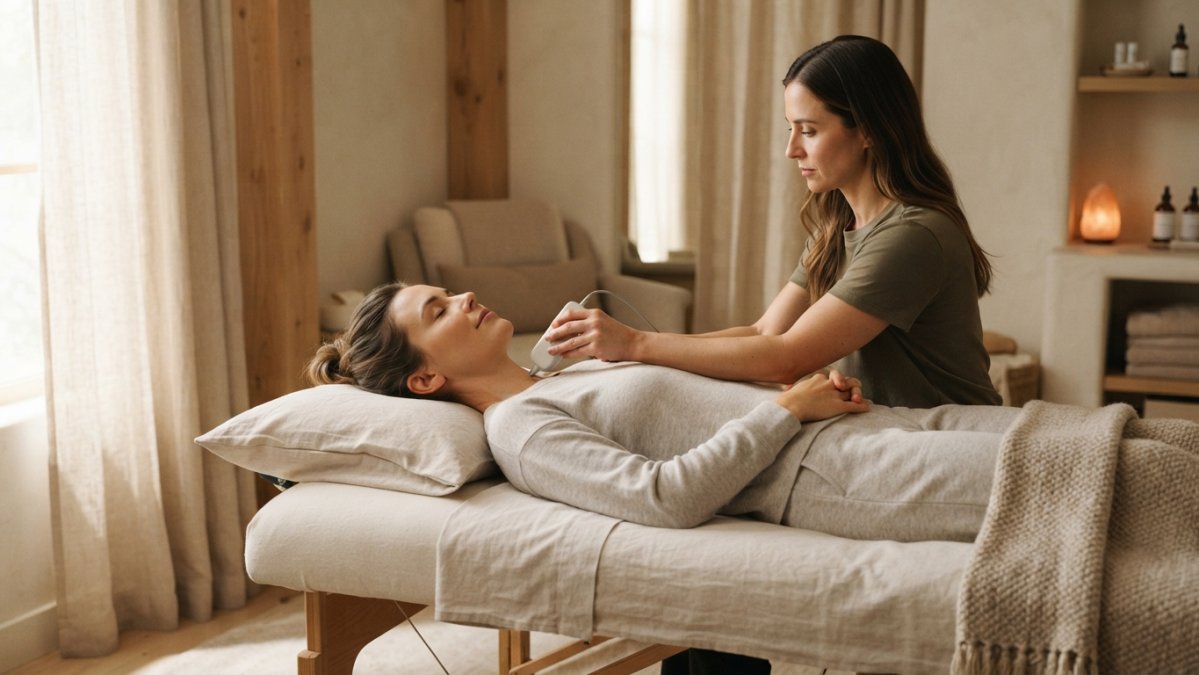
At Unwind Longevity, each session is 30 minutes and stacks five or more complementary therapies, including vibroacoustic therapy, red light therapy, and PEMF therapy, so you get more done in one visit.
How to Choose a Vagus Nerve Stimulation Provider in Los Angeles
Choosing a provider comes down to three things: credentials, equipment, and how well they explain the process. Ask who runs the session and what training they have.
Look for a provider who:
- Explains the science in plain language
- Screens you for health conditions first
- Uses devices cleared for safe external use
- Stacks VNS with other therapies for better results
- Offers a clear plan, not endless add-ons
If you are searching for vagus nerve stimulation near me, visit the space in person. A calm, clean studio tells you a lot about how they treat clients.
| What to Check | Why It Matters |
|---|---|
| Staff credentials | Confirms trained oversight |
| Device type | External devices carry lower risk |
| Session length | 20-30 minutes is typical |
| Therapy stacking | More value per visit |
| Follow-up plan | Shows they track your progress |
Conclusion: Integrating VNS Into Your Nervous System Routine
Building a routine that supports your nervous system takes more than one session. The science behind vagus nerve stimulation points to steady, repeated practice as the key to lasting change.
At Unwind Longevity, we combine clinician-guided care with advanced therapies like vibroacoustic therapy, PEMF therapy, and infrared sauna to help you regulate stress and support long-term wellness.
Book a session with Unwind Longevity and start building a nervous system routine that lasts.
Frequently Asked Questions
What happens in the body during vagus nerve stimulation?
Vagus nerve stimulation sends electrical or acoustic signals along the vagus nerve, which runs from the neck to the brainstem. This activates parasympathetic pathways, slowing heart rate, reducing inflammation, and shifting the nervous system out of fight-or-flight. Noninvasive methods like vibroacoustic therapy use sound waves to achieve similar effects without surgery.
Is vagus nerve stimulation safe, and what are the side effects?
Noninvasive vagus nerve stimulation is generally well tolerated. Common side effects include mild tingling, temporary hoarseness, or skin irritation at the stimulation site. Serious complications are rare but possible, especially with implanted devices. Always consult a qualified healthcare provider before starting any VNS therapy, particularly if you have a history of heart conditions or seizures.
Can vagus nerve stimulation help with anxiety?
Research suggests vagus nerve stimulation may reduce anxiety symptoms by increasing parasympathetic activity and lowering stress hormones. Studies on noninvasive VNS have shown promising results for generalized anxiety and panic symptoms, though individual responses vary. Many people combine VNS with other nervous system regulation therapies for cumulative benefit.
How long does it take for vagus nerve stimulation to work?
Response depends on the condition, the device, and individual physiology, so patience and professional guidance are key.