 ultimate-guide
Vibroacoustic Therapy for Sleep Issues: What to Expect
Table of Contents
- What Vibroacoustic Therapy for Sleep Issues Actually Does
- How Long Is a Vibroacoustic Therapy Session?
- Benefits of Vibroacoustic Therapy for Insomnia
- Nervous System Regulation for Better Sleep
- What Happens During a Session at a Los Angeles Wellness Studio
- Who Vibroacoustic Therapy Is For (and Who Should Skip It)
- Combining Vibroacoustic Therapy With Other Sleep and Recovery Therapies
- Frequently Asked Questions
Last Updated: October 2, 2026
What Vibroacoustic Therapy for Sleep Issues Actually Does
Vibroacoustic therapy for sleep issues uses low-frequency sound and vibration delivered through a specialized bed or mat to calm the nervous system and help the body settle into rest. Unlike a meditation app that asks you to quiet your own mind, this therapy does the work physically: specific frequencies pulse through your body while you lie still, fully clothed, for a short session. At Unwind Longevity, a boutique health spa in West Los Angeles, we offer nervous system regulation, and vibroacoustic therapy is a key part of our approach for clients who can't switch off at night.
The therapy isn't a sedative and it isn't a cure. It's a tool for shifting your body out of a stressed state so sleep becomes possible again.
How Low-Frequency Sound and Vibration Reach the Nervous System
Vibroacoustic therapy is the application of audible low-frequency sound waves, typically in the range the body feels more than hears, directly into the body through vibrating transducers built into a bed or mat. Those vibrations travel through muscle and tissue and stimulate sensory receptors that feed back into the autonomic nervous system. The practical effect many people notice is a shift from a revved-up state toward a calmer one, which is the state your body needs before sleep. According to the National Center for Complementary and Integrative Health overview of sound and vibration therapies, research into these approaches is still developing, so it's best to treat vibroacoustic therapy as a supportive practice rather than a stand-alone medical treatment.
How Long Is a Vibroacoustic Therapy Session?
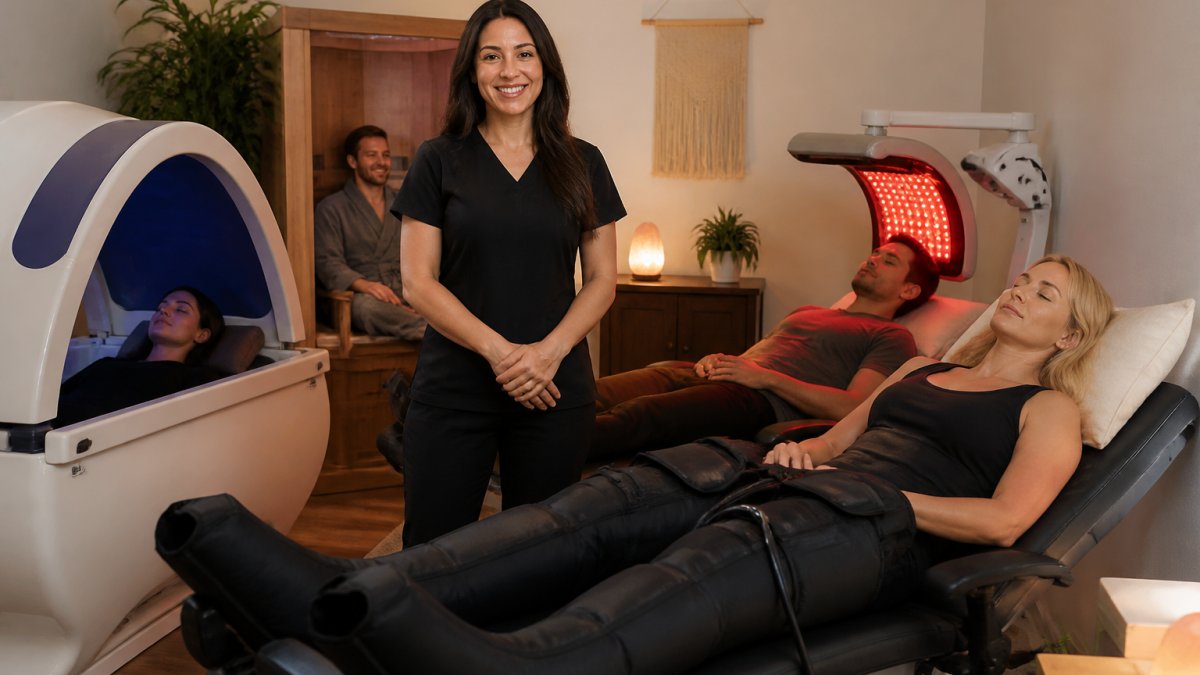
A vibroacoustic therapy session typically runs 15 to 45 minutes, with most studio appointments landing around 30 minutes. The length matters less than consistency: shorter, regular sessions tend to work better for sleep support than one long session every few weeks. At Unwind Longevity, every session is 30 minutes and stacks vibroacoustic therapy with 5+ complementary therapies, including photobiomodulation, sensory deprivation, brainwave resonance, binaural soundwave frequencies, and weighted compression, so you get more benefit from a single visit. If you're squeezing this in before bed or on a lunch break, 30 minutes is the sweet spot: long enough to settle the nervous system, short enough to fit a real schedule.
Benefits of Vibroacoustic Therapy for Insomnia
Many clients describe a heavy, relaxed feeling afterward, similar to the calm that follows a good massage. Others notice their mind stops racing, which is often the real obstacle to sleep, not physical tiredness. The therapy is not a replacement for treating an underlying sleep disorder, and anyone with persistent insomnia should talk to a physician. Think of it as one part of a wind-down routine, not the whole solution. For people who've tried meditation and still wake at 3 a.m. with a racing heart, the appeal is that vibroacoustic therapy works on the body directly rather than asking the mind to cooperate.
Nervous System Regulation for Better Sleep
Nervous system regulation for better sleep means helping your body shift out of a stress-dominant state and into a rest-and-recovery state before bed. When your nervous system stays stuck in a heightened mode, sleep stays shallow and easily broken. Regulation practices, from breathwork to vibration-based therapies, aim to bring the body back toward baseline so sleep can deepen.
Why a Regulated Nervous System Changes Sleep Quality
A regulated nervous system changes sleep quality because sleep depends on the body feeling safe enough to let its guard down. When stress hormones stay elevated into the evening, the brain treats rest as a lower priority and keeps you in lighter sleep stages. Vibroacoustic therapy gives the body a physical cue to downshift, which many people find easier than trying to talk themselves into calm. The American Academy of Sleep Medicine guidance on sleep and stress notes that stress is one of the most common barriers to healthy sleep, which is why approaches that address the nervous system directly often help where willpower alone doesn't.
What Happens During a Session at a Los Angeles Wellness Studio
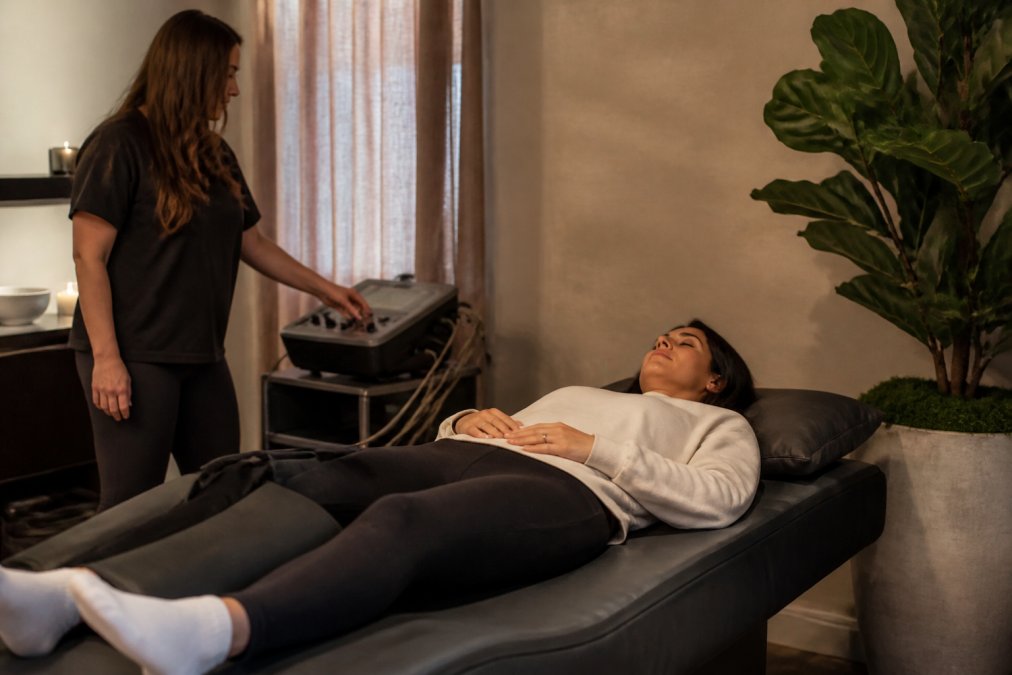
A session at a Los Angeles wellness studio usually starts with a brief intake, then you lie fully clothed on the vibroacoustic bed while low-frequency sound and vibration run for the session length. Most people close their eyes and simply rest; some fall asleep entirely. At Unwind Longevity, the 30-minute appointment layers vibroacoustic therapy with complementary therapies, so you're not choosing between treatments, you're getting a stack in one visit. Staff check in beforehand to make sure the settings suit you, and the room stays dim and quiet throughout. If you're searching for vibroacoustic therapy near me in West LA, the practical question is whether the studio stacks therapies or offers them one at a time, since a stacked session saves both time and money.
Who Vibroacoustic Therapy Is For (and Who Should Skip It)
Vibroacoustic therapy suits adults dealing with stress-driven sleep trouble, athletes recovering from training, and anyone who's tried standard relaxation methods without much luck. It's not for everyone: people who are pregnant, have a pacemaker or implanted electronic device, have uncontrolled seizures, or are managing a serious medical condition should check with a physician first. If you're unsure whether you're a good fit, a consultation is the right first step, not a guess. Many clients at Unwind Longevity are relatively healthy professionals in their 30s to 60s who are stressed rather than sick, and that's exactly the group this therapy tends to help.
Combining Vibroacoustic Therapy With Other Sleep and Recovery Therapies
Vibroacoustic therapy works best when paired with complementary recovery methods rather than used alone. Compression therapy, red light therapy, PEMF, and infrared sauna all support recovery in different ways, and stacking them in one session means the nervous system gets multiple calming inputs at once. For sleep specifically, the combination of vibration, weighted compression, and sound-based relaxation tends to be the most direct route. Unwind Longevity also offers clinician-guided services through a telehealth partner, including sleep-focused peptide programs such as the microdosing program starting at $179, for clients whose sleep concerns go beyond stress alone. The FDA guidance on medical devices and wellness claims is worth understanding if you want to know which therapies are cleared for specific uses versus offered as general wellness support.
Sleep trouble rarely has a single cause, and that's why chasing one fix at a time often leaves you stuck. Unwind Longevity in West LA pairs vibroacoustic therapy with 5+ complementary therapies in a single 30-minute session, backed by clinician-guided telehealth services and a nervous-system-first approach to longevity. If you've tried the apps and the yoga and you're still staring at the ceiling, book a session and give your body a different kind of input. Get started with Unwind Longevity and see what a regulated nervous system feels like.
Frequently Asked Questions
How does vibroacoustic therapy help with sleep issues?
Vibroacoustic therapy sends low-frequency sound waves and gentle vibration through a specialized bed or mat. The physical sensation can help shift the body out of a stressed, alert state and into a calmer one. Many people who struggle with racing thoughts at bedtime find that the combination of sound and vibration gives their nervous system something steady to settle into, which can make falling asleep feel less like a fight.
Is vibroacoustic therapy FDA-cleared for treating insomnia?
Vibroacoustic therapy devices are not currently FDA-cleared as a treatment for insomnia. They are generally marketed as wellness tools rather than medical devices for diagnosing or treating a sleep disorder. If you have chronic insomnia or another diagnosed sleep condition, talk with a physician or sleep specialist about it. Vibroacoustic therapy can be a complementary relaxation practice, not a replacement for medical care.
How long is a vibroacoustic therapy session, and how many do I need?
Sessions typically run about 30 minutes, though some providers offer shorter or longer formats. Some people notice they feel more relaxed after a single session, while others find that consistent sessions over several weeks help them build a more reliable wind-down routine. Because everyone's sleep patterns and stress levels differ, it's best to ask a provider what cadence makes sense for your situation.
Can vibroacoustic therapy be combined with other wellness treatments?
Yes. Many wellness studios pair vibroacoustic therapy with red light therapy, compression therapy, PEMF, infrared sauna, or guided breathing. Stacking therapies in one visit can save time and may deepen the relaxation response. If you are also using supplements or clinician-guided treatments such as peptides for sleep support, mention everything you are taking to your provider so they can flag any interactions.